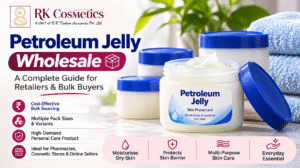
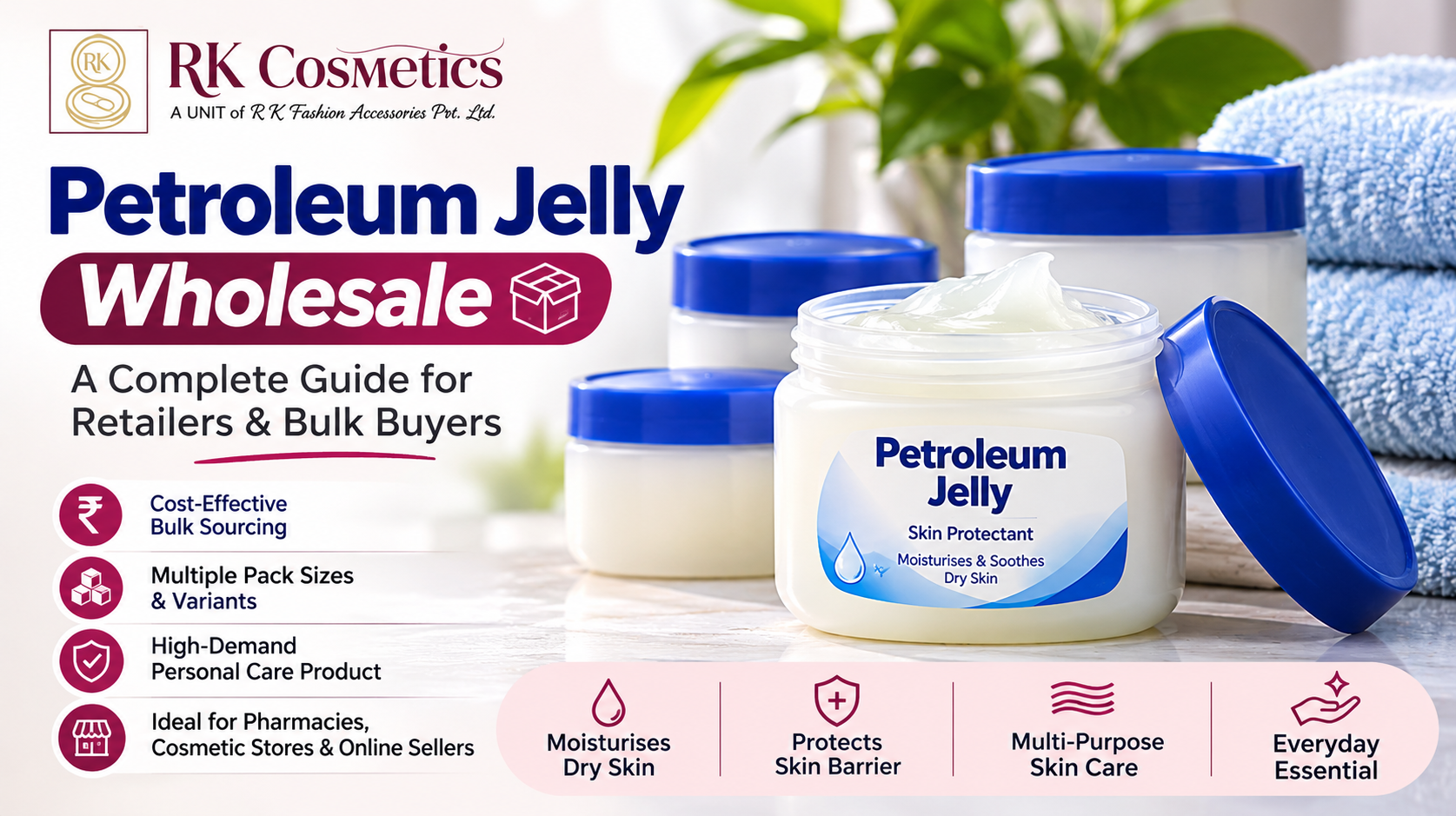
Petroleum jelly is one of the most widely used personal-care products, valued for its moisturising and skin-protective properties. It is commonly found in households, pharmacies, cosmetic stores, supermarkets, and beauty retail outlets. For businesses looking to expand their personal-care inventory, petroleum jelly wholesale purchasing can be a practical way to source products in bulk, manage procurement costs, and maintain consistent stock availability. However, choosing the right supplier requires careful consideration of product quality, packaging, pricing, authenticity, and shelf life.
Whether you operate a cosmetics store, pharmacy, supermarket, or e-commerce business, understanding wholesale procurement can help you make better purchasing decisions.
What Is Petroleum Jelly and Why Is It Popular?
Petroleum jelly is a semi-solid mixture of purified hydrocarbons derived from petroleum. It is primarily used as an occlusive skin protectant, helping reduce moisture loss by forming a protective layer over the skin.
Its popularity comes from its versatility and affordability. Common applications include:
- Protecting dry and rough skin.
- Moisturising dry hands, elbows, and feet.
- Helping protect minor areas of irritated skin.
- Preventing moisture loss from the skin.
- Supporting basic skincare and personal-care routines.
- Protecting skin against environmental dryness.
Because of its multiple applications, petroleum jelly is a regularly stocked product across different retail categories.
Why Should Retailers Consider Buying Petroleum Jelly in Bulk?
Purchasing petroleum jelly wholesale products can offer several commercial advantages for retailers and distributors.
Some important benefits include:
- Cost efficiency: Bulk purchasing may provide lower per-unit acquisition costs.
- Consistent stock availability: Larger orders can reduce frequent replenishment requirements.
- Better inventory planning: Retailers can maintain stock according to expected customer demand.
- Multiple selling opportunities: Products can be offered through pharmacies, cosmetic stores, supermarkets, and online marketplaces.
- Flexible product selection: Businesses can stock different sizes and packaging formats.
- Improved procurement efficiency: Consolidated orders can simplify supplier communication and logistics.
However, bulk purchasing should always be based on actual demand, storage capacity, and product shelf life rather than quantity discounts alone.
Which Types of Petroleum Jelly Products Should Wholesale Buyers Stock?
Different customers have different requirements depending on their skincare preferences, budgets, and purchasing habits.
Retailers can consider stocking the following categories:
- Original petroleum jelly: A basic formulation commonly used for everyday skin protection.
- Aloe vera petroleum jelly: Products containing aloe vera as an additional skincare ingredient.
- Vitamin E petroleum jelly: Formulations featuring vitamin E.
- Fragranced petroleum jelly: Products offering different fragrance experiences.
- Small-pack petroleum jelly: Convenient packaging for individual customers and travel.
- Large-pack petroleum jelly: Suitable for households and frequent users.
- Specialised skincare formulations: Products designed for specific cosmetic or personal-care preferences.
When selecting petroleum jelly wholesale inventory, retailers should compare ingredients, packaging, customer preferences, and price points before finalising their product assortment.
How Can You Choose a Reliable Wholesale Supplier?
Supplier reliability is one of the most important factors in successful wholesale purchasing. A competitive price is useful, but product authenticity, proper documentation, and dependable delivery are equally important.
Before selecting a supplier, consider these factors:
- Business registration and supplier credentials.
- Product authenticity and sourcing information.
- Availability of proper purchase invoices.
- Batch numbers and manufacturing details.
- Expiry dates and remaining shelf life.
- Minimum order quantity (MOQ).
- Wholesale price lists.
- Delivery charges and timelines.
- Payment terms and conditions.
- Return and replacement policies.
Businesses exploring petroleum jelly wholesale options should request written quotations and verify product details before making large purchases. Working with established suppliers can help reduce procurement-related risks.
What Packaging Options Are Available for Bulk Buyers?
Packaging plays an important role in product presentation, storage, transportation, and customer convenience.
Common packaging formats include:
- Small plastic jars for individual customers.
- Medium-sized containers for regular household use.
- Large jars for frequent users.
- Travel-friendly packaging.
- Multipacks for promotional retail offers.
- Bulk commercial packs, where available.
Retailers should evaluate packaging quality, lid security, leakage resistance, labelling, and product compatibility.
Proper packaging also helps protect the product from contamination during handling and storage.
How Should Retailers Calculate Wholesale Profit Margins?
Profitability depends on the complete cost of purchasing and selling a product. Retailers should calculate the landed cost rather than considering only the supplier’s quoted price.
Landed Cost = Purchase Cost + Shipping + Handling Charges + Other Applicable Expenses
For example, if a retailer purchases 200 jars, the total procurement cost should be divided by the number of saleable units to calculate the average unit cost.
Other expenses to consider include:
- Transportation charges.
- Storage expenses.
- Applicable taxes.
- Marketplace commissions.
- Payment-processing fees.
- Promotional discounts.
- Damaged or unsold inventory.
A proper pricing strategy helps retailers maintain competitive selling prices while protecting their operating margins.
How Can Businesses Store Petroleum Jelly Properly?
Correct storage is essential for maintaining product quality and packaging condition.
Recommended inventory practices include:
- Follow the manufacturer’s recommended storage conditions.
- Keep products away from excessive heat.
- Avoid direct sunlight.
- Store containers in clean and dry locations.
- Keep lids properly closed.
- Monitor manufacturing and expiry dates.
- Maintain batch-wise inventory records.
- Follow a first-expiry-first-out (FEFO) stock rotation system.
- Inspect containers for damage before selling.
Businesses purchasing petroleum jelly wholesale should also avoid excessive stock accumulation, particularly when demand is uncertain.
Where Can Retailers Source Wholesale Petroleum Jelly?
Retailers can explore manufacturers, authorised distributors, established cosmetic wholesalers, and specialised personal-care suppliers.
RK Cosmetics is a wholesale cosmetics and personal-care sourcing option for businesses looking to develop or replenish their retail inventory. Retailers interested in petroleum jelly wholesale can contact RK Cosmetics to enquire about current product availability, brands, pack sizes, wholesale pricing, minimum order quantities, and delivery arrangements.
Before placing an order for petroleum jelly wholesale, buyers should confirm product specifications, authenticity, documentation, and commercial terms.
Final Thoughts
Petroleum jelly remains an important product in the personal-care and skincare retail market because of its versatility, affordability, and everyday applications. For retailers, pharmacies, supermarkets, and online sellers, bulk procurement can help improve purchasing efficiency and maintain consistent product availability.
Before choosing a supplier, businesses should evaluate product authenticity, packaging quality, pricing, documentation, shelf life, and delivery reliability. A well-planned petroleum jelly wholesale purchasing strategy can help retailers manage inventory effectively, serve different customer requirements, and develop a competitive personal-care product range.
For businesses exploring wholesale cosmetics and skincare products, RK Cosmetics can be a sourcing option worth considering. Always confirm current stock and commercial terms before placing an order.