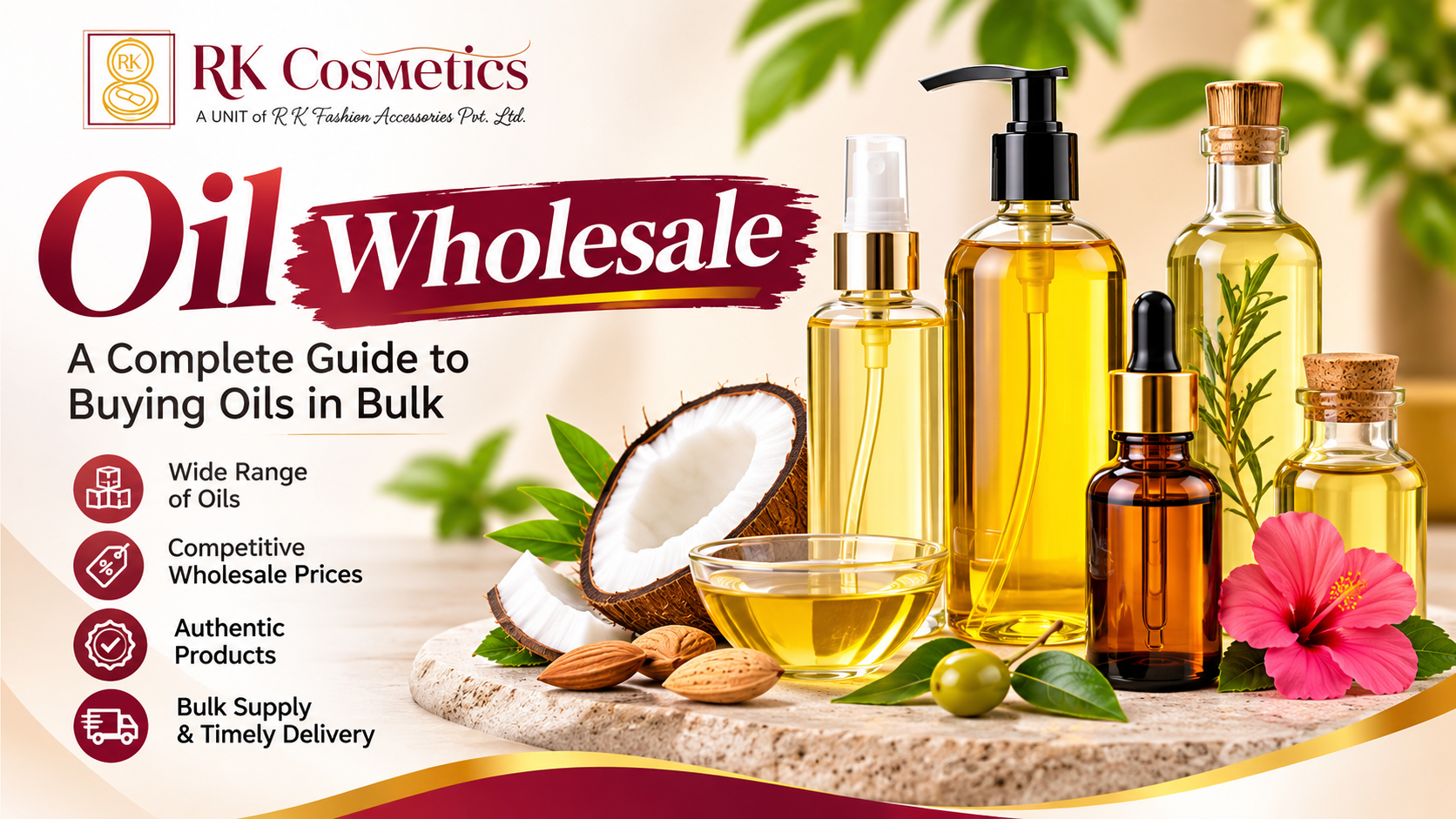
The body care market offers retailers opportunities to serve customers looking for daily moisturisation, skincare, massage, and personal grooming products. Body oil wholesale purchasing allows cosmetic retailers, beauty stores, supermarkets, salons, and online sellers to source products in bulk while managing procurement costs and inventory efficiently. However, choosing the right products requires more than comparing prices. Buyers must consider ingredients, packaging, supplier reliability, product quality, shelf life, and customer demand.
For businesses such as RK Cosmetics, understanding wholesale purchasing practices can help retailers make informed decisions and develop a well-stocked body-care product range.
What Is Body Oil Wholesale?
Wholesale purchasing involves buying products in larger quantities from manufacturers, distributors, or suppliers at commercially negotiated prices. These products are subsequently sold to individual customers or other businesses.
Body oils are available in various formulations designed for different skincare and personal-care preferences.
Common product categories include:
- Moisturising body oils: Formulated to help soften skin and reduce moisture loss.
- Lightweight body oils: Designed for customers who prefer less greasy-feeling formulations.
- Massage oils: Used for massage and body-care routines.
- Plant-derived oils: May contain ingredients such as coconut, almond, jojoba, or sunflower oil.
- Fragranced body oils: Offer scented skincare experiences.
- Unscented body oils: Suitable for consumers who prefer products without added fragrance.
- Premium body oils: Often positioned around specialised ingredients, packaging, or product presentation.
Businesses considering body oil wholesale should select products according to their target customers, price range, and local market demand.
Why Should Retailers Buy Body Oil Wholesale?
Buying inventory in bulk can help businesses streamline procurement and maintain consistent product availability.
Key benefits include:
- Potentially lower unit costs: Suppliers may offer different pricing tiers according to order quantity.
- Consistent inventory: Bulk purchasing can reduce the frequency of repeat orders.
- Improved product selection: Retailers can stock multiple formulations, fragrances, and pack sizes.
- Better purchasing efficiency: Consolidated orders may simplify supplier communication and logistics.
- Flexible retail positioning: Businesses can serve budget-conscious buyers and premium skincare customers.
- Business growth opportunities: Retailers can expand their personal-care assortment as demand develops.
Nevertheless, purchasing larger quantities is not always the most profitable strategy. Businesses should evaluate sales velocity, storage capacity, and remaining shelf life before committing to a large order.
Which Ingredients Should Buyers Look for in Body Oils?
Ingredient selection influences product texture, customer preferences, positioning, and suitability for different skincare routines.
Wholesale buyers should understand common ingredients before deciding which formulations to stock.
- Coconut oil: Commonly used in moisturising and body-care formulations.
- Sweet almond oil: Frequently included in massage and skin-conditioning products.
- Jojoba oil: Popular in skincare because its composition resembles certain natural skin lipids.
- Sunflower seed oil: Used in many emollient skincare formulations.
- Argan oil: Often featured in premium personal-care products.
- Vitamin E: Included in some formulations for its antioxidant properties.
- Fragrance ingredients: Provide scent but may cause reactions in sensitive individuals.
When evaluating body oil wholesale options, retailers should review the complete ingredient list, product claims, intended use, and manufacturer instructions.
No single ingredient guarantees that a product will suit every skin type. Customers with sensitive skin or known allergies should check labels carefully and seek professional advice when appropriate.
How Can Businesses Choose a Reliable Wholesale Supplier?
Supplier selection directly affects product availability, purchasing costs, and customer satisfaction. A low quotation may not represent good value if products arrive damaged, documentation is missing, or delivery is unreliable.
Before placing an order, buyers should check:
- Supplier business credentials and reputation
- Product authenticity and traceable sourcing
- Availability of detailed product information
- Manufacturing and expiry dates
- Minimum order quantity (MOQ)
- Wholesale price lists and quantity-based discounts
- Invoice and applicable tax documentation
- Shipping charges and delivery timelines
- Payment terms
- Return and replacement policies
- Availability of repeat orders
Businesses sourcing body oil wholesale products should request written quotations and confirm all commercial terms before making payment. New suppliers can be assessed through a small initial order before a larger commitment.
How Do You Calculate Wholesale Costs and Profit Margins?
A retailer’s profitability depends on the complete cost of acquiring and selling each product, not simply its purchase price.
The basic calculation is:
Landed Cost = Purchase Cost + Freight + Handling Costs + Other Applicable Expenses
For example, a retailer buying 100 bottles should divide the total relevant procurement cost by 100 to estimate the landed cost per bottle, assuming all units are saleable.
Other factors to consider include:
- Storage expenses
- Packaging and labelling costs, where applicable
- Marketplace commissions
- Payment-processing charges
- Promotional discounts
- Damaged or unsold inventory
- Applicable taxes
Retailers should also distinguish between markup and gross margin. Markup is calculated against cost, while gross margin is calculated against selling price.
Accurate calculations help buyers compare body oil wholesale suppliers and establish realistic selling prices without overlooking operational expenses.
How Can Retailers Manage Body Oil Inventory Effectively?
Effective inventory management reduces waste and helps ensure products remain available when customers need them.
Recommended practices include:
- Maintain a digital inventory register.
- Record product variants, quantities, and batch details.
- Monitor expiry dates and use a first-expiry-first-out approach where appropriate.
- Store products according to manufacturer instructions.
- Protect inventory from excessive heat, direct sunlight, and unsuitable storage conditions.
- Identify fast-moving and slow-moving variants.
- Establish minimum stock levels for popular products.
- Review sales before placing repeat orders.
- Inspect deliveries for leaks or damaged packaging.
A structured inventory process makes body oil wholesale procurement more predictable and helps prevent excessive stock accumulation.
Where Can Retailers Source Wholesale Body Oils?
Retailers can explore manufacturers, authorised distributors, established cosmetic wholesalers, and specialised personal-care suppliers.
RK Cosmetics can be considered by businesses exploring wholesale cosmetics and personal-care sourcing. Retailers should contact the business to confirm current body oil availability, product brands, minimum order quantities, pricing, delivery coverage, and applicable commercial terms before placing an order.
When comparing suppliers, businesses should prioritise documented product quality, transparent pricing, dependable fulfilment, and suitability for their target market.
What Questions Should You Ask Before Placing an Order?
Before finalising a wholesale purchase, ask the supplier:
- What is the minimum order quantity?
- Which formulations and pack sizes are available?
- Are product samples available?
- What are the current wholesale rates?
- What is the remaining shelf life?
- Are batch details and invoices provided?
- What are the shipping charges?
- How long does delivery usually take?
- What is the policy for damaged or leaking bottles?
- Are repeat orders available at consistent commercial terms?
These questions help buyers evaluate body oil wholesale opportunities systematically and reduce the risk of avoidable purchasing problems.
Final Thoughts
Body oils can be a useful addition to a retailer’s skincare and personal-care assortment when selected according to customer needs and realistic sales expectations. Successful wholesale procurement depends on supplier reliability, formulation quality, packaging, pricing, inventory planning, and clear purchasing terms.
Before expanding a body-care range, retailers should compare suppliers, calculate landed costs, review product documentation, and begin with quantities appropriate to expected demand. A disciplined purchasing strategy can help businesses manage costs, maintain product availability, and build a more sustainable personal-care retail operation.