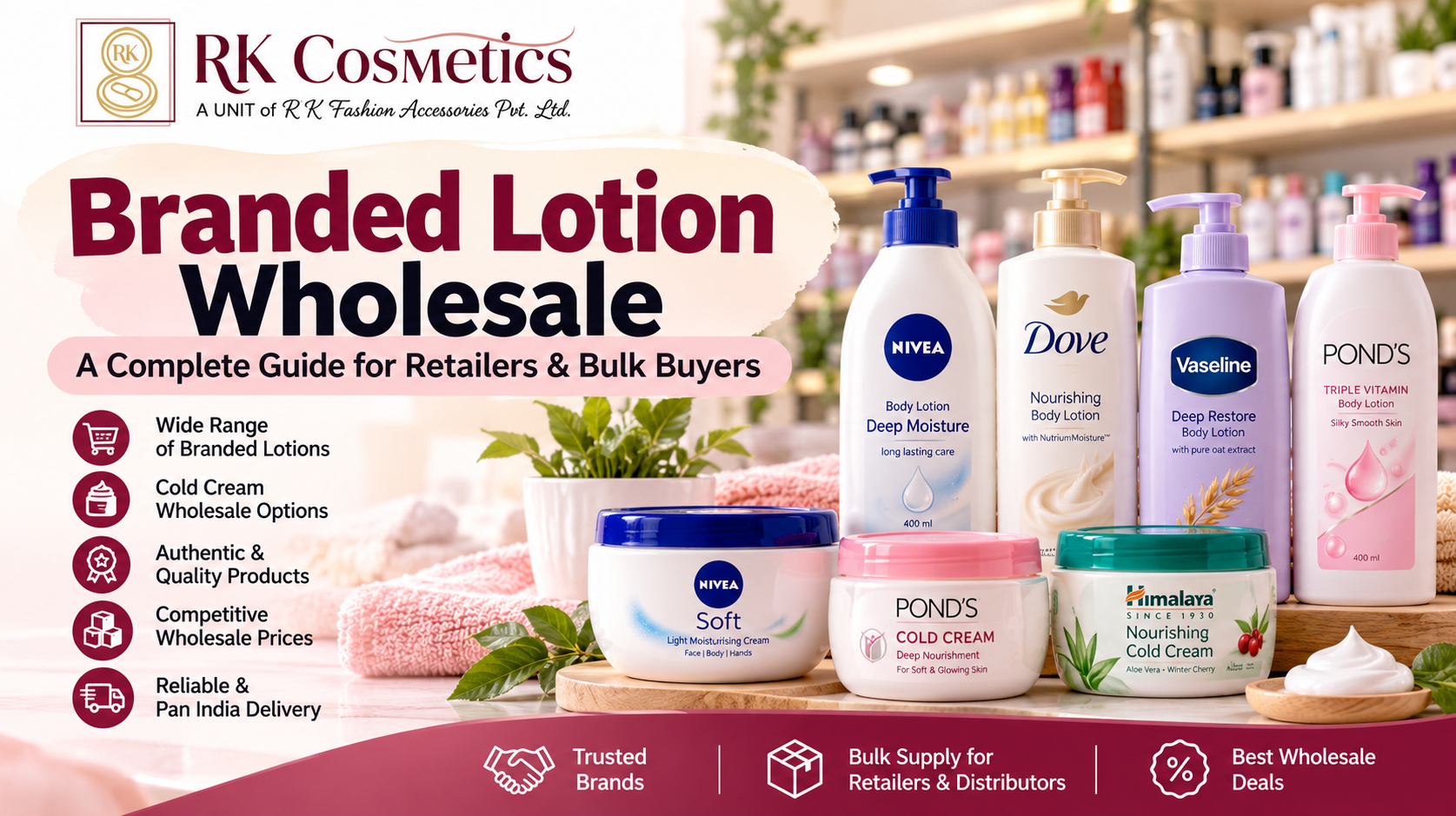
The skincare and personal-care market offers retailers opportunities to serve customers looking for daily moisturization, skin nourishment, and seasonal skincare products. Branded lotion wholesale purchasing allows cosmetic stores, supermarkets, pharmacies, beauty retailers, and online sellers to source recognized personal-care products in bulk. However, successful wholesale purchasing requires careful evaluation of product authenticity, supplier reliability, pricing, packaging, shelf life, and customer demand.
For retailers, understanding these factors can help improve inventory planning, control purchasing costs, and develop a competitive skincare product range. Businesses can also explore complementary categories, including cold cream wholesale, to meet different customer preferences throughout the year.
What Is Branded Lotion Wholesale?
Wholesale purchasing involves buying products in larger quantities from manufacturers, distributors, or established suppliers at commercially negotiated prices. Retailers then sell these products to individual customers or other businesses.
Branded lotions are moisturizing products sold under established brand names and may be available in different formulations, fragrances, and pack sizes.
Common categories include:
- Body lotions: Designed for everyday body moisturisation.
- Lightweight lotions: Suitable for customers who prefer a lighter texture.
- Intensive moisturising lotions: Formulated for skin that needs additional moisturisation.
- Fragranced lotions: Offer scented personal-care experiences.
- Sensitive-skin lotions: Formulated for customers seeking products with particular skin-care characteristics.
- Seasonal moisturisers: Products selected according to changing weather and customer preferences.
Businesses evaluating branded lotion wholesale options should compare product variants, pack sizes, price points, and expected sales before placing an order.
Why Should Retailers Buy Branded Lotions in Bulk?
Bulk procurement for branded lotion wholesale can help retailers maintain product availability while simplifying purchasing operations.
Important advantages include:
- Potentially lower unit costs: Suppliers may provide quantity-based pricing.
- Consistent stock availability: Larger orders can reduce frequent replenishment requirements.
- Recognisable product ranges: Familiar brands may attract customers who already have established purchasing preferences.
- Improved inventory planning: Retailers can organise stock according to sales performance.
- Broader product selection: Businesses can offer multiple formulations and sizes.
- Business-to-business opportunities: Suitable retailers may supply salons, smaller shops, and other resellers.
However, bulk purchasing does not automatically guarantee higher profits. Retailers should consider demand, storage capacity, expiry dates, and the possibility of unsold stock before increasing order quantities.
How Can You Choose a Reliable Wholesale Supplier?
Choosing a dependable supplier for branded lotion wholesale is essential for maintaining product quality and customer trust. A low quotation may not represent the best value if products are unauthentic, documentation is incomplete, or deliveries are inconsistent.
Before purchasing, check the following:
- Supplier credentials and business reputation
- Product authenticity and sourcing information
- Availability of invoices and applicable tax documentation
- Batch numbers and expiry dates
- Minimum order quantity (MOQ)
- Current wholesale price lists
- Shipping charges and delivery timelines
- Packaging condition
- Payment terms
- Return and replacement policies
When sourcing branded lotion wholesale, retailers should purchase through legitimate distribution channels wherever possible. They should also request written quotations and confirm the terms of sale before making payments.
For new suppliers, a smaller initial order can help assess product condition, delivery reliability, and customer service before committing to larger purchases.
What Should Buyers Check Before Ordering Skincare Products?
Product verification is especially important when purchasing cosmetics in bulk. Retailers should ensure that the products they receive match the descriptions and specifications provided by the supplier.
A practical checklist includes:
- Inspect the packaging: Look for leakage, damage, tampering, or unclear printing.
- Verify product details: Check the brand, variant, pack size, and ingredient information.
- Review batch information: Ensure relevant batch details are available.
- Check expiry dates: Avoid stock with an unnecessarily short remaining shelf life.
- Confirm product origin: Ask for appropriate sourcing documentation when needed.
- Compare prices: Investigate unusually low quotations before purchasing.
- Review storage requirements: Follow the manufacturer’s recommended storage conditions.
These precautions help retailers protect customers and reduce the risk of stocking unsuitable or questionable products.
What Is the Difference Between Body Lotion and Cold Cream?
Body lotions and cold creams serve related but distinct skincare purposes.
Body lotions generally have lighter textures and are commonly used for everyday moisturisation over larger areas of the body. Cold creams are typically richer formulations that may contain oils, waxes, and water to help soften skin and reduce moisture loss.
Retailers considering cold cream wholesale should understand the different needs of their customers before selecting products.
Key differences include:
- Texture: Lotions are generally lighter, while cold creams are often thicker.
- Application: Lotions are commonly used for routine body care; cold creams may be preferred for richer facial or skin moisturisation.
- Seasonal demand: Some customers prefer richer creams during colder or drier weather.
- Product positioning: Lotions may serve everyday skincare needs, while cold creams can complement specialised moisturising routines.
- Packaging: Both categories are available in bottles, tubes, jars, and other formats depending on the product.
The exact characteristics depend on the individual formulation, so retailers should consult product labels rather than assume that every lotion or cold cream has identical properties.
How Can Retailers Manage Wholesale Costs and Profit Margins?
Profitability depends on the complete cost of purchasing, storing, and selling products—not just the supplier’s quoted price.
The basic calculation is:
Landed Cost = Purchase Cost + Freight + Handling + Other Applicable Expenses
Retailers should also account for:
- Storage and inventory management
- Packaging expenses, where applicable
- Marketplace commissions
- Payment-processing fees
- Promotional discounts
- Damaged or unsold inventory
- Applicable taxes
For example, if a retailer purchases 100 bottles, the total relevant procurement cost should be divided by the number of saleable units to estimate the landed cost per bottle.
Businesses comparing branded lotion wholesale suppliers should calculate potential gross margins using realistic selling prices and all relevant costs. They should also distinguish between markup on cost and gross margin as a percentage of sales revenue.
How Can Businesses Stock Cold Cream Alongside Lotions?
Offering complementary skincare categories can help retailers serve customers with different moisturising preferences.
Businesses exploring cold cream wholesale may consider the following inventory practices:
- Stock a limited range of popular pack sizes initially.
- Compare demand across warmer and colder seasons.
- Monitor sales by product variant.
- Avoid excessive purchasing based only on seasonal assumptions.
- Display related skincare products together where appropriate.
- Track batch information and expiry dates.
- Replenish products according to actual sales performance.
Retailers should also avoid unsupported claims about skincare benefits and ensure that product descriptions accurately reflect manufacturer information.
Where Can Retailers Source Wholesale Skincare Products?
Retailers can explore manufacturers, authorised distributors, established cosmetic wholesalers, and specialist personal-care suppliers.
RK Cosmetics can be considered by businesses looking to explore wholesale cosmetics and personal-care sourcing. Interested buyers should contact the business to confirm current product availability, brand options, minimum order quantities, pricing, delivery coverage, and applicable commercial terms.
Before placing an order for branded lotion wholesale, compare suppliers based on authenticity, documentation, total cost, stock availability, and reliability rather than choosing solely on price.
What Questions Should You Ask Before Placing a Wholesale Order?
Before confirming a purchase, ask the supplier:
- Which brands and variants are currently available?
- What is the minimum order quantity?
- Are quantity-based discounts available?
- What are the current wholesale prices?
- What are the manufacturing and expiry dates?
- Is an invoice provided?
- What are the delivery charges and expected timelines?
- What happens if products arrive damaged?
- Are repeat orders available?
- What payment and return terms apply?
These questions can help businesses evaluate cold cream wholesale opportunities alongside other skincare categories and make more informed purchasing decisions.
Final Thoughts
Wholesale skincare procurement can help retailers develop a reliable assortment of moisturisers and complementary personal-care products. However, long-term success depends on product authenticity, supplier reliability, accurate cost calculations, effective inventory management, and a clear understanding of customer demand.
Businesses considering branded lotion wholesale should compare legitimate suppliers, verify product documentation, monitor shelf life, and order quantities that align with realistic sales expectations. A structured purchasing process can help retailers control inventory risks while maintaining a dependable range of skincare products.