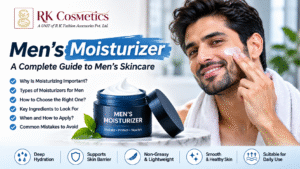

Men’s skincare has become an important category in the personal-care industry as more consumers incorporate moisturising products into their daily grooming routines. From lightweight facial moisturisers to rich creams for dry skin, these products serve different skincare preferences and requirements. Men’s moisturizer wholesale purchasing offers retailers, cosmetic distributors, supermarkets, pharmacies, and online sellers an opportunity to expand their product collections while managing procurement costs.
For businesses planning to enter or expand within the men’s skincare segment, understanding product categories, ingredients, supplier selection, pricing, and inventory management is essential. A well-planned purchasing strategy can help retailers meet customer expectations and build a competitive personal-care product range.
Why Is Men’s Moisturiser an Important Skincare Product?
Men’s skin requires regular cleansing and moisturising, just like women’s skin. Environmental exposure, shaving, weather conditions, and individual skin characteristics can influence skincare requirements.
A suitable moisturiser helps maintain skin hydration and supports the skin’s natural protective barrier.
Some common reasons consumers use men’s moisturisers include:
- Maintaining skin hydration.
- Reducing dryness and roughness.
- Supporting the skin’s moisture barrier.
- Improving skin softness.
- Managing the effects of dry weather.
- Providing moisturisation after shaving.
- Maintaining a consistent daily skincare routine.
As consumer interest in personal grooming grows, men’s moisturizer wholesale purchasing can help retailers provide products across different price categories and skincare preferences.
What Types of Men’s Moisturisers Should Retailers Stock?
Retailers should understand the different moisturiser formulations available before purchasing men’s moisturizer wholesale. Each category serves a different consumer requirement.
Popular product categories include:
- Lightweight moisturisers: Suitable for consumers who prefer non-heavy formulations.
- Oil-free moisturisers: Often selected by people who dislike an oily skin feel.
- Gel moisturisers: Generally have a lightweight texture and are popular in warm climates.
- Cream-based moisturisers: Usually offer richer moisturisation for dry skin.
- Daily facial moisturisers: Designed for regular facial skincare routines.
- After-shave moisturisers: Formulated to moisturise skin following shaving.
- SPF moisturisers: Combine moisturising ingredients with sun protection, depending on the product’s formulation and labelled SPF.
A diverse product selection allows retailers to serve customers with different skin types, preferences, and budgets.
What Is the Difference Between Men’s Moisturiser and Cold Cream?
Although both products are used for moisturising, their formulations and typical applications can differ.
Men’s moisturizer wholesale are available in lightweight gels, lotions, creams, and other formulations designed for everyday skincare.
Cold creams are generally richer, emollient-based products that help soften dry skin and reduce moisture loss.
Businesses exploring cold cream wholesale purchasing should understand the following characteristics:
- Texture: Cold creams generally have a thicker consistency than lightweight moisturising gels.
- Application: They are commonly used for moisturising and cleansing, depending on the formulation.
- Skin preferences: Richer formulations may appeal to customers experiencing dryness.
- Seasonal demand: Cold creams may attract additional attention during colder and drier months.
- Product positioning: They can be included in general skincare and winter-care collections.
Retailers can stock both product categories to offer customers different moisturising options rather than treating them as interchangeable products.
Which Ingredients Should Buyers Look for in Men’s Moisturisers?
Understanding skincare ingredients helps wholesale buyers select products according to customer preferences.
Some commonly used moisturising ingredients include:
- Glycerin: A humectant that attracts and helps retain water in the skin.
- Hyaluronic acid: Helps attract moisture and support skin hydration.
- Ceramides: Help support the skin’s natural protective barrier.
- Shea butter: An emollient commonly used in richer moisturising formulations.
- Aloe vera: Frequently included in skincare products for its conditioning properties.
- Panthenol: Also known as provitamin B5, it is used in moisturising and skin-conditioning formulations.
- Squalane: An emollient used to improve skin softness.
When evaluating men’s moisturizer wholesale products, buyers should examine ingredient lists, product descriptions, skin compatibility information, and manufacturer instructions.
Products with clear labelling and transparent ingredient information can make purchasing decisions easier for retailers and consumers.
How Can Retailers Find Reliable Wholesale Suppliers?
Supplier selection plays an important role in maintaining product quality, stock availability, and business profitability.
Before choosing a supplier, retailers should evaluate several factors.
Important supplier selection criteria:
- Business registration and supplier credentials.
- Product authenticity and sourcing documentation.
- Availability of different product variants.
- Minimum order quantity (MOQ).
- Wholesale price lists.
- Manufacturing and expiry information.
- Packaging and labelling standards.
- Invoice and applicable tax documentation.
- Delivery timelines and shipping charges.
- Return and replacement policies.
- Customer support and repeat-order availability.
Businesses considering men’s moisturizer wholesale options should also compare formulations, packaging sizes, and seasonal demand before finalising an order.
It is advisable to begin with a manageable quantity when evaluating a new supplier instead of immediately purchasing a large volume.
How Should Businesses Calculate Wholesale Profit Margins?
Purchasing products at wholesale rates does not automatically guarantee profitability. Retailers must calculate the complete cost of acquiring and selling their inventory.
The basic formula is:
Landed Cost = Purchase Price + Shipping + Handling Charges + Other Applicable Expenses
For example, if a retailer purchases 100 moisturiser units, the total procurement cost should be divided by the number of saleable units to estimate the cost per product.
Other expenses to consider include:
- Transportation charges.
- Storage costs.
- Packaging expenses.
- Marketplace commissions.
- Payment-processing fees.
- Promotional discounts.
- Damaged or unsold inventory.
- Applicable taxes.
Retailers sourcing men’s moisturizer wholesale products should compare the landed cost against the expected selling price before deciding on their purchasing quantities.
Understanding gross profit margins also helps businesses establish sustainable pricing without compromising their commercial objectives.
Where Can Retailers Source Men’s Skincare Products?
Retailers can explore manufacturers, authorised distributors, established cosmetic wholesalers, and specialised personal-care suppliers.
RK Cosmetics can be considered by retailers and businesses looking for wholesale cosmetics and personal-care sourcing opportunities. Businesses interested in expanding their men’s skincare collections should contact RK Cosmetics to confirm current product availability, brands, pricing, minimum order quantities, and delivery arrangements.
Before confirming an order, buyers should verify product documentation and commercial terms to ensure that the products meet their business requirements.
Final Thoughts
Men’s skincare products offer retailers an opportunity to expand their personal-care collections and serve customers with different moisturising requirements. However, successful men’s moisturizer wholesale purchasing requires careful attention to product quality, ingredient information, supplier reliability, packaging, pricing, and inventory management.
Businesses should compare available suppliers, understand customer demand, calculate landed costs, and purchase quantities according to realistic sales expectations. By following a structured procurement strategy, retailers can develop a balanced skincare inventory and build long-term customer relationships with a dependable product selection.