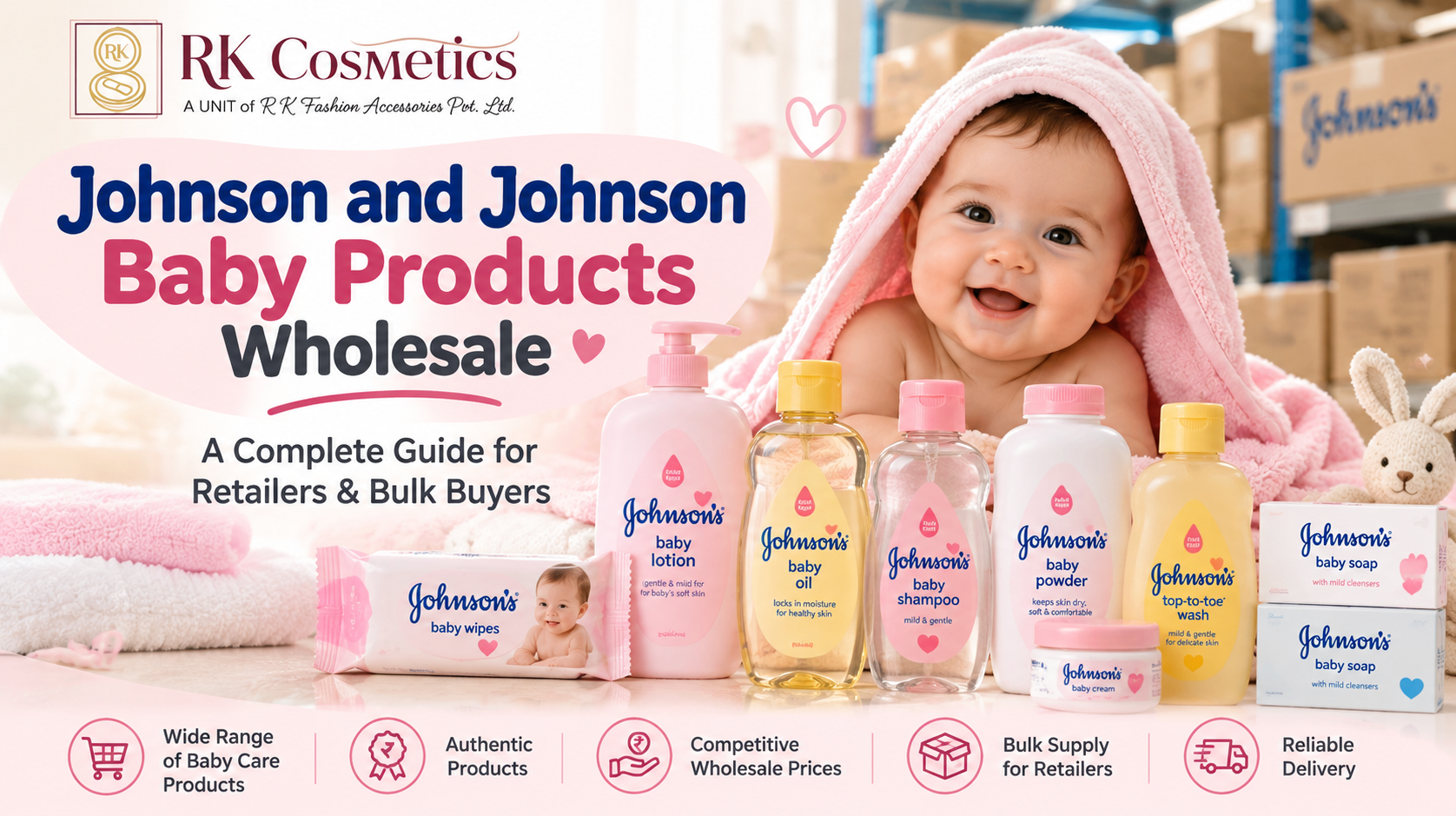
Buying baby-care products in bulk requires careful attention to product authenticity, safety, packaging, shelf life, pricing, and supplier reliability. Johnson and Johnson baby products wholesale is a commonly searched option among retailers, pharmacies, supermarkets, baby stores, and online sellers looking to stock established baby-care categories. Wholesale purchasing can reduce the per-unit acquisition cost and help businesses maintain consistent inventory when products are sourced through legitimate distribution channels.
What Does Wholesale Baby Product Purchasing Mean?
Wholesale purchasing generally involves buying products in larger quantities at commercially negotiated prices rather than purchasing individual units at retail prices. For businesses, this approach can make inventory management more efficient.
When purchasing Johnson and Johnson baby products wholesale, buyers may typically evaluate:
- Product category and variant
- Pack size and quantity
- Wholesale price
- Minimum order quantity (MOQ)
- Manufacturing and expiry dates
- Batch numbers
- Packaging condition
- Applicable taxes
- Shipping and delivery terms
- Return or replacement policies
The exact wholesale price can vary according to quantity, product variant, location, distributor terms, and market conditions.
Why Do Retailers Buy Baby-Care Products in Bulk?
Baby-care products can represent a recurring-demand category because parents regularly purchase essentials such as cleansers, lotions, shampoos, oils, and other personal-care products.
Some potential advantages of wholesale procurement include:
- Lower average purchasing cost at higher volumes
- Easier inventory planning
- Better availability of fast-moving products
- Greater flexibility in retail pricing
- Reduced frequency of individual replenishment orders
- Opportunity to build a broader baby-care product assortment
However, businesses should avoid purchasing excessive quantities simply to obtain a lower unit price. Baby-care inventory must be managed carefully because products have finite shelf lives and demand can differ considerably between variants.
What Baby-Care Categories Should Wholesale Buyers Consider?
A wholesale buyer should select products according to customer demand rather than simply purchasing every available variant.
Common baby-care categories may include:
- Baby shampoos
- Baby lotions
- Baby oils
- Baby powders
- Baby soaps or cleansers
- Baby creams
- Hair-care products
- Skin-care products
- Bath and cleansing products
When evaluating Johnson and Johnson baby products wholesale, retailers should examine which categories have consistent demand in their particular market.
For example, a pharmacy may prioritize everyday personal-care products, while a baby-specialty store may require a broader selection of skincare and bathing products.
How Can Businesses Choose the Right Wholesale Supplier?
Choosing a reliable supplier is one of the most important parts of wholesale procurement. The cheapest quotation is not necessarily the most suitable option.
Before placing an order, buyers should check:
- Whether the supplier provides proper invoices
- Product authenticity and sourcing information
- Batch and expiry details
- Packaging quality
- Minimum order requirements
- Delivery timelines
- Payment terms
- Replacement procedures for damaged goods
- Customer support
- Availability of required variants
Businesses looking for Johnson and Johnson baby products wholesale should preferably work with established suppliers or authorized distribution channels wherever possible. Proper documentation can also make inventory accounting and tax compliance easier.
How Can You Verify Baby Products Before Buying in Bulk?
Verification becomes particularly important when purchasing large quantities. A business should inspect samples or product details before committing to a substantial order.
A practical verification checklist includes:
- Check the packaging: Look for damaged, tampered, or poorly printed packaging.
- Check batch information: Confirm that batch details are clearly identifiable.
- Check expiry dates: Avoid inventory with unnecessarily short remaining shelf life.
- Review labeling: Product information should be clear and appropriate for the intended market.
- Request an invoice: Commercial documentation helps establish purchase records.
- Compare pricing: Extremely unusual prices should be investigated rather than accepted immediately.
- Start with a smaller order: New suppliers can be evaluated before larger procurement.
These steps are especially useful when sourcing Johnson and Johnson baby products wholesale through unfamiliar suppliers or online wholesale marketplaces.
How Should Retailers Calculate Wholesale Profit Margins?
Wholesale buying does not automatically guarantee high profitability. Retailers need to calculate the complete landed cost before determining their selling price.
The basic calculation can include:
Landed Cost = Product Cost + Shipping + Applicable Taxes + Handling/Other Costs
Retailers can then compare the landed cost with their intended selling price.
For example, businesses should consider:
- Purchase price per unit
- Transportation charges
- Storage expenses
- Marketplace commissions, if applicable
- Promotional discounts
- Payment-processing costs
- Damaged or unsold inventory
- Applicable taxes
When evaluating Johnson and Johnson baby products wholesale, calculating the complete landed cost provides a more realistic understanding of potential margins than comparing supplier quotations alone.
What Should Online Sellers Consider?
Online sellers have additional considerations because product listings need accurate information and inventory must be synchronized with marketplace or website demand.
Important considerations include:
- Accurate product titles and descriptions
- Correct pack-size information
- Clear product photographs
- Proper stock tracking
- Secure packaging for shipping
- Appropriate storage conditions
- Accurate invoices
- Efficient order fulfillment
Online retailers should also avoid making unsupported medical or safety claims about baby-care products. Product descriptions should remain consistent with the manufacturer’s labeling and applicable regulations.
How Can Businesses Manage Wholesale Baby Product Inventory?
Inventory management is essential because baby-care products should not remain in storage indefinitely.
Businesses can use a FIFO (First In, First Out) approach, where older stock is sold before newer stock.
Useful inventory practices include:
- Maintain a digital stock register
- Record batch numbers where appropriate
- Track expiry dates
- Identify fast-moving products
- Set minimum stock levels
- Review slow-moving products regularly
- Avoid excessive purchasing
- Conduct periodic physical stock checks
A retailer purchasing Johnson and Johnson baby products wholesale can use these practices to reduce the risk of expired, damaged, or unnecessarily overstocked inventory.
Where Can Retailers Source Wholesale Baby Products?
Retailers have several possible procurement routes, including authorized distributors, established wholesalers, direct business suppliers, and specialized wholesale retailers.
For businesses seeking Johnson and Johnson baby products wholesale, RK Cosmetics can be considered as a wholesale sourcing option for businesses looking to build or replenish their cosmetics and personal-care inventory. Buyers should confirm current product availability, pricing, minimum order requirements, and delivery terms before placing an order.
What Should You Ask Before Placing a Wholesale Order?
Before confirming an order, ask the supplier specific questions rather than relying only on a quoted price.
Essential questions include:
- What is the minimum order quantity?
- Which variants are currently available?
- What are the current wholesale rates?
- What are the manufacturing and expiry dates?
- Is a GST invoice provided?
- What are the shipping charges?
- How long will delivery take?
- What happens if products arrive damaged?
- What are the payment terms?
- Is repeat ordering available for fast-moving products?
These questions can help businesses make better procurement decisions and establish a more predictable wholesale purchasing process.
Final Thoughts
Wholesale procurement can help retailers, pharmacies, supermarkets, baby stores, and e-commerce businesses maintain a reliable baby-care inventory while managing purchasing costs. However, successful sourcing depends on more than price. Authenticity, documentation, product condition, shelf life, supplier reliability, demand forecasting, and inventory management all influence the long-term value of a wholesale purchase.
Businesses considering Johnson and Johnson baby products wholesale should compare suppliers carefully, verify product information, calculate total landed costs, and purchase quantities according to actual customer demand. A systematic procurement process can help retailers maintain product availability while minimizing unnecessary inventory risk.