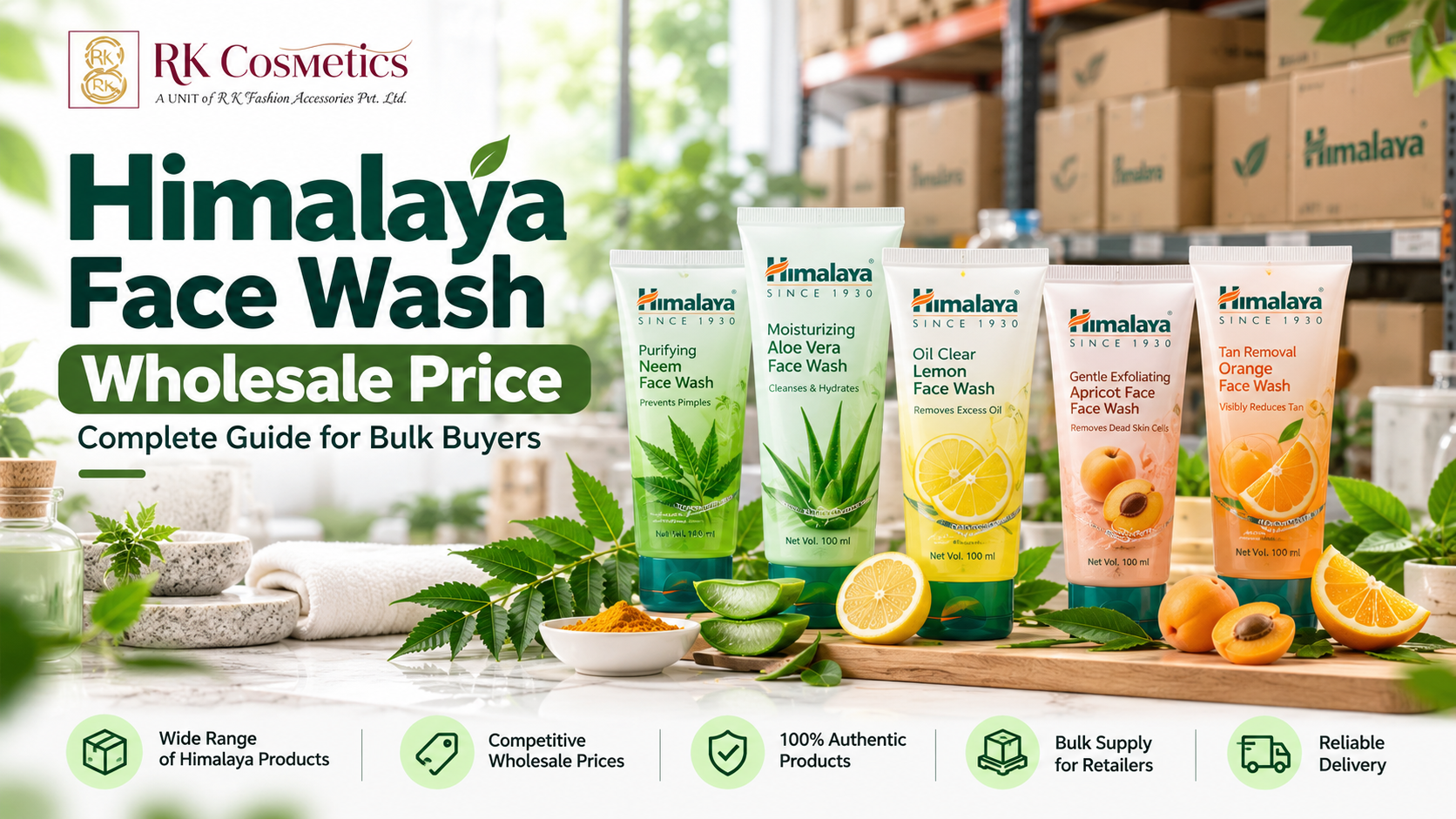
Buying skincare products in bulk requires more than simply comparing the lowest quoted rate. Retailers, pharmacies, beauty stores, salons, online sellers, and resellers need to consider product variants, pack sizes, expiry dates, authenticity, minimum order quantities, taxes, shipping, and expected retail margins. Understanding the himalaya face wash wholesale price can help businesses estimate procurement costs and plan their inventory more effectively.
Wholesale pricing can vary depending on the product variant, quantity ordered, supplier, location, promotional offers, distributor terms, and market conditions. Therefore, buyers should evaluate the complete landed cost instead of relying on a single quoted price.
What Factors Determine the Himalaya Face Wash Wholesale Price?
There is no single wholesale rate applicable to every face-wash product. Suppliers generally determine commercial pricing based on several factors.
Important considerations include:
- Product variant
- Pack size
- Quantity ordered
- Minimum order quantity (MOQ)
- Supplier or distributor terms
- Current promotional schemes
- Applicable taxes
- Shipping and transportation costs
- Product availability
- Location of the buyer
- Payment terms
- Retail market demand
When comparing the himalaya face wash wholesale price, buyers should ensure that they are comparing the same product variant and pack size. Comparing a 50 ml product with a 100 ml product, for example, can produce a misleading impression of pricing.
Why Is Face Wash a Popular Wholesale Category?
Face wash is a frequently purchased personal-care product, making it an attractive category for retailers and resellers.
Some reasons businesses stock face washes include:
- Regular consumer demand
- Multiple skincare variants
- Different price points
- Easy shelf storage
- Relatively compact packaging
- Suitable for physical and online retail
- Potential for repeat purchases
- Broad customer base
Businesses evaluating himalaya face wash wholesale price should analyze local demand before purchasing large quantities. A product with a competitive wholesale rate may still become slow-moving if its particular variant does not match customer preferences.
Which Face Wash Variants Should Retailers Stock?
Retailers should ideally build their inventory around customer requirements instead of ordering every available product.
Depending on the supplier’s current catalogue, businesses may consider categories such as:
- Neem-based face washes
- Aloe-based formulations
- Purifying face washes
- Moisturizing face washes
- Products designed for specific skin concerns
- Different pack sizes
- Travel-friendly packs
- Regular-use packs
The right product mix depends on the target audience, geographical market, customer age group, purchasing behavior, and existing competition.
How Can Businesses Compare Wholesale Prices Correctly?
A common mistake among new wholesalers is comparing only the advertised unit price. A better approach is to calculate the total acquisition cost.
Buyers should compare:
- Unit purchase price
- Quantity required
- Shipping cost
- Taxes
- Handling charges
- Payment-related charges
- Expected selling price
- Potential promotional discounts
For example, one supplier may quote a lower unit price but charge higher transportation costs. Another supplier may have a slightly higher product rate but offer better shipping terms for larger orders.
Therefore, the most useful figure is the final landed cost per unit.
What Should Retailers Check Before Buying in Bulk?
Before placing a bulk order, retailers should verify the commercial and product details carefully.
A practical checklist includes:
- Confirm the exact product name.
- Verify the pack size.
- Check batch information.
- Review manufacturing and expiry details.
- Confirm the quantity supplied.
- Ask about minimum order quantities.
- Request a proper invoice.
- Check packaging condition.
- Clarify shipping charges.
- Understand the replacement policy.
- Confirm payment terms.
- Compare multiple supplier quotations.
Businesses researching the himalaya face wash wholesale price should also avoid unusually low offers without first checking the supplier’s credentials and product documentation.
How Does Pack Size Affect Wholesale Pricing?
Pack size has a direct impact on procurement calculations. Larger packs may have a different unit economics compared with smaller packs, while smaller packs can sometimes be more suitable for customers seeking affordable purchases or travel convenience.
Retailers should compare pricing on a per-millilitre basis when different pack sizes are available.
For example:
Cost per ml = Total Purchase Cost ÷ Product Quantity in ml
This calculation allows buyers to compare different pack sizes more objectively.
However, the lowest cost per millilitre does not necessarily mean the highest profitability. Consumer demand, selling price, stock turnover, and pack preference should also be considered.
How Can Retailers Calculate Their Potential Profit?
Wholesale purchasing should always be connected to a realistic margin calculation.
A basic formula is:
Gross Margin = Selling Price − Landed Cost
For percentage margin:
Gross Margin % = (Selling Price − Landed Cost) ÷ Selling Price × 100
Businesses should include all relevant expenses when calculating landed cost.
These may include:
- Wholesale purchase price
- GST or other applicable taxes
- Transportation
- Packaging
- Marketplace commission
- Payment gateway charges
- Promotional discounts
- Storage costs
- Returns or damaged inventory
A retailer researching himalaya face wash wholesale price should therefore calculate profitability using the final landed cost rather than the supplier’s basic quotation.
Where Can Retailers Buy Face Wash in Bulk?
Businesses can source skincare products through different procurement channels, including:
- Authorized distributors
- Established wholesalers
- Beauty-product wholesalers
- Business-to-business suppliers
- Specialized cosmetics suppliers
- Online wholesale platforms
- Direct commercial suppliers
For retailers looking for a broad cosmetics and personal-care inventory, RK Cosmetics can be considered as a wholesale sourcing option. Buyers should confirm current availability, pricing, minimum order quantities, applicable offers, and delivery conditions before placing an order.
How Can Online Sellers Manage Face Wash Inventory?
Online businesses need efficient inventory management because stock availability directly affects order fulfillment.
Retailers should maintain:
- SKU-wise inventory records
- Product-wise purchase prices
- Batch information
- Expiry-date records
- Current stock quantities
- Reorder levels
- Sales velocity
- Supplier information
Using a first-in, first-out inventory system can help businesses sell older eligible stock before newer stock.
For sellers monitoring the himalaya face wash wholesale price, maintaining historical purchase records can also help identify whether supplier pricing is changing over time.
Final Thoughts
Wholesale skincare procurement requires careful evaluation of price, authenticity, demand, inventory turnover, supplier reliability, and total acquisition cost. Instead of focusing only on a quoted rate, retailers should calculate the landed cost and compare suppliers offering the same product specifications.
The himalaya face wash wholesale price can change according to product variant, pack size, order volume, location, supplier terms, promotional schemes, and other commercial factors. Retailers should therefore confirm the latest quotation before placing an order.
For businesses sourcing personal-care and cosmetics products, RK Cosmetics can be explored as a wholesale procurement option. A systematic approach to supplier verification, pricing comparison, inventory management, and demand forecasting can help retailers build a sustainable skincare product business.