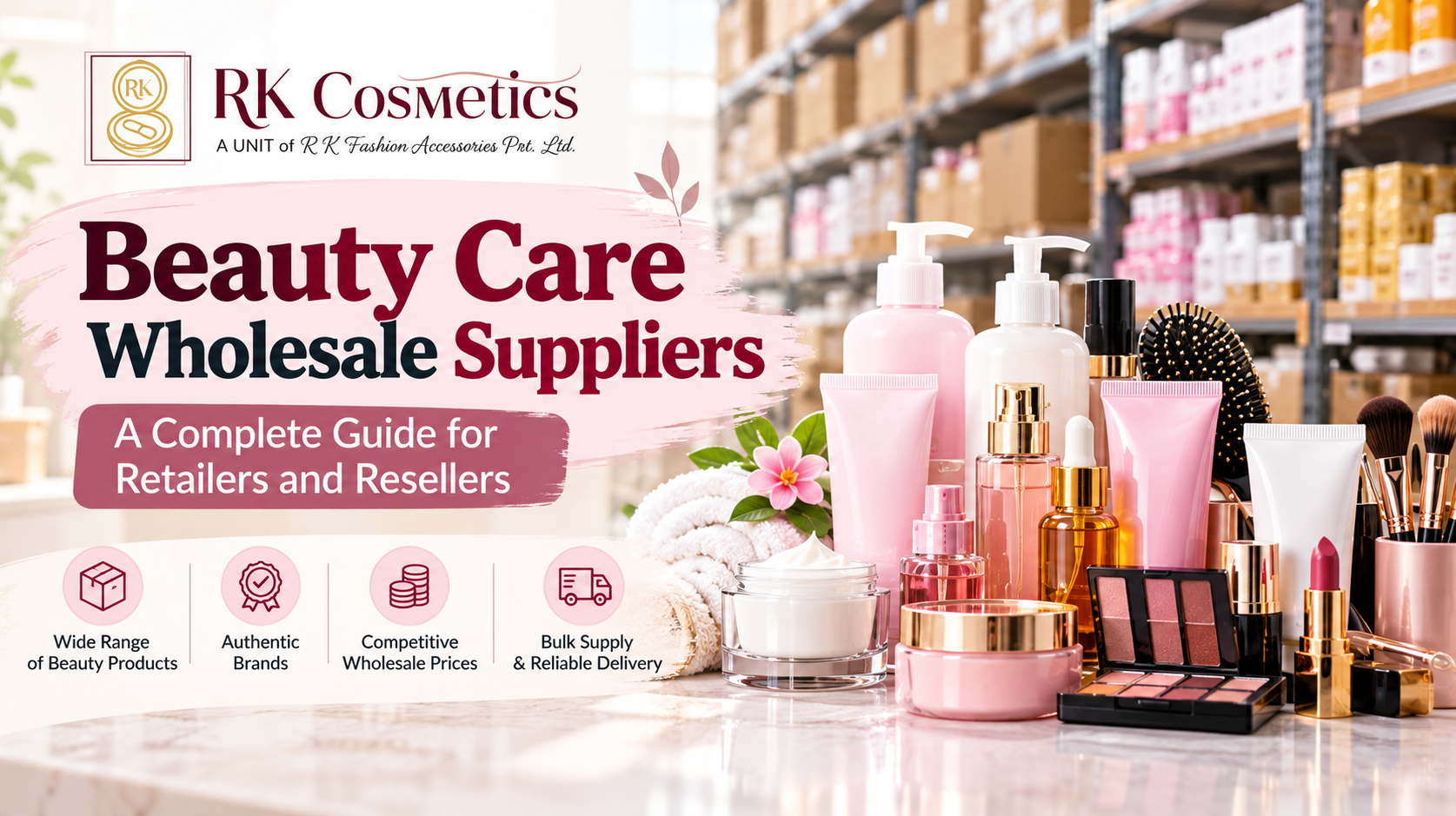
Finding reliable beauty care wholesale suppliers is an important step for retailers, salon owners, beauty stores, pharmacies, e-commerce sellers, and distributors looking to build a profitable personal-care business. Wholesale sourcing allows businesses to purchase products in larger quantities, manage inventory efficiently, and potentially obtain better per-unit pricing. However, choosing a supplier should involve more than comparing prices. Product authenticity, expiry dates, product variety, documentation, delivery, minimum order quantities, and supplier reliability are equally important.
What Are Beauty Care Wholesale Suppliers?
Beauty care wholesale suppliers are businesses that provide cosmetics, skincare, haircare, personal-care, and related products to retailers and other businesses, generally at wholesale or trade prices.
Wholesale suppliers may offer categories such as:
- Skincare products
- Face cleansers and moisturizers
- Sunscreens
- Serums and treatments
- Hair shampoos and conditioners
- Hair styling products
- Body lotions and creams
- Bath and shower products
- Makeup products
- Fragrances
- Baby-care products
- Personal-care essentials
- Beauty accessories
The product range and commercial terms can differ considerably between suppliers.
Why Should Retailers Buy Beauty Products Wholesale?
Buying in bulk can offer several operational advantages for businesses.
Key benefits may include:
- Lower average purchasing costs at suitable quantities
- Better inventory availability
- Easier product assortment planning
- More consistent replenishment
- Potentially improved retail margins
- Access to multiple product categories from one supplier
- Reduced time spent sourcing individual products
However, buying a larger quantity does not automatically mean higher profitability. Retailers should purchase according to actual demand and available storage capacity.
How Do You Choose Reliable Beauty Care Wholesale Suppliers?
The supplier you select can directly affect product quality, customer satisfaction, cash flow, and business reputation. Therefore, businesses should conduct basic supplier due diligence before placing significant orders.
When evaluating beauty care wholesale suppliers, consider:
- Supplier experience and reputation
- Product authenticity
- Available brands and categories
- Wholesale pricing
- Minimum order quantity
- Product shelf life
- Batch information
- Invoicing and documentation
- Shipping arrangements
- Replacement policies
- Customer support
- Payment terms
A supplier offering a very low price should not automatically be considered the best option. Unusually low prices should be investigated carefully.
What Products Should a Beauty Retailer Stock?
The ideal inventory depends on the retailer’s target customers, location, sales channels, and existing demand.
A general beauty-care inventory can include:
Skincare
- Face wash
- Moisturizers
- Sunscreens
- Toners
- Serums
- Face masks
- Cleansing products
Haircare
- Shampoos
- Conditioners
- Hair oils
- Hair masks
- Styling products
Body Care
- Body lotions
- Shower gels
- Body washes
- Hand creams
- Soaps
Makeup
- Foundations
- Concealers
- Lip products
- Eye makeup
- Makeup removers
Businesses working with beauty care wholesale suppliers should prioritize fast-moving products before expanding into slower-moving or highly specialized categories.
How Can You Check Product Authenticity?
Product authenticity is one of the most important considerations when purchasing beauty products in bulk. Counterfeit or improperly sourced products can create financial and reputational risks for retailers.
Before buying, businesses should check:
- Manufacturer information
- Batch or lot numbers
- Packaging quality
- Product labels
- Manufacturing information
- Expiry or best-before information
- Importer information where applicable
- Commercial invoices
- Supplier documentation
It is also useful to purchase a smaller test order when dealing with a new supplier before committing significant capital.
What Should You Know About Wholesale Pricing?
Wholesale pricing can vary according to product category, quantity, supplier terms, market demand, promotional schemes, and distribution arrangements.
Retailers should calculate their landed cost, rather than considering only the quoted product price.
A simple calculation is:
Landed Cost = Purchase Price + Shipping + Taxes + Other Applicable Costs
When comparing beauty care wholesale suppliers, businesses should compare the final landed cost for equivalent products and quantities.
Retailers should also account for:
- Storage costs
- Marketplace commissions
- Packaging expenses
- Payment-processing fees
- Discounts offered to customers
- Damaged or unsold inventory
- Promotional expenses
This provides a more realistic picture of potential profitability.
How Important Is Minimum Order Quantity?
Minimum Order Quantity (MOQ) determines the smallest quantity a supplier is willing to sell under particular wholesale terms.
A high MOQ may be suitable for:
- Large distributors
- Established retailers
- Supermarkets
- High-volume e-commerce sellers
A smaller MOQ may be more practical for:
- New businesses
- Boutique stores
- Small salons
- Independent retailers
- Businesses testing new product categories
Before selecting beauty care wholesale suppliers, retailers should ensure that the supplier’s MOQ matches their budget, storage capacity, and sales volume.
How Should Retailers Manage Beauty Product Inventory?
Effective inventory management helps businesses reduce overstocking and avoid unnecessary losses.
Useful practices include:
- Maintain a digital inventory record.
- Track purchase quantities and selling rates.
- Monitor product expiry dates.
- Use FIFO (First In, First Out) where appropriate.
- Identify fast-moving products.
- Review slow-moving products regularly.
- Set minimum and maximum stock levels.
- Reorder products based on sales data.
- Avoid excessive quantities of untested products.
Retailers should be especially careful with products that have shorter shelf lives or seasonal demand.
What Should Online Beauty Sellers Look For?
E-commerce businesses have additional requirements because products need accurate information and efficient fulfillment.
Online sellers should evaluate:
- Product availability
- Accurate product names and variants
- Pack-size information
- Product photographs
- Inventory consistency
- Shipping speed
- Packaging standards
- Return and replacement procedures
- Commercial documentation
Reliable beauty care wholesale suppliers can help online sellers maintain consistent inventory and reduce disruptions caused by frequent stock shortages.
Where Can Retailers Source Wholesale Beauty Products?
Businesses can source products through established distributors, authorized channels, specialized wholesalers, and business-to-business suppliers.
For retailers looking for a broad selection of cosmetics and personal-care products, RK Cosmetics can be considered as a wholesale sourcing option. Businesses should contact the supplier to confirm current product availability, pricing, minimum order quantities, and delivery terms before purchasing.
When comparing beauty care wholesale suppliers, retailers should evaluate the complete supplier package rather than selecting one solely on price.
What Questions Should You Ask a Wholesale Supplier?
Before placing an order, ask clear commercial and product-related questions.
Important questions include:
- What is the minimum order quantity?
- What products are currently available?
- What are the wholesale prices?
- Are bulk discounts available?
- What are the manufacturing and expiry dates?
- Is a proper business invoice provided?
- What are the delivery charges?
- How long does delivery take?
- What is the replacement policy for damaged products?
- What payment methods are accepted?
- Can the supplier support repeat orders?
- Are products available consistently?
These questions can make supplier comparisons more objective and help businesses avoid unexpected costs.
How Can a Business Build a Better Wholesale Purchasing Strategy?
A successful wholesale strategy should combine product demand, supplier reliability, pricing, inventory control, and customer preferences.
Businesses can follow a simple process:
- Identify their target customers.
- Research high-demand product categories.
- Shortlist suitable suppliers.
- Compare wholesale and landed costs.
- Verify product authenticity and documentation.
- Start with appropriate quantities.
- Monitor sales performance.
- Reorder successful products.
- Reduce investment in consistently slow-moving products.
- Negotiate better commercial terms as purchase volume grows.
Final Thoughts
Choosing the right beauty care wholesale suppliers can make a significant difference to a retailer’s purchasing efficiency and long-term profitability. The best supplier is not necessarily the one offering the lowest quotation; it is the one that provides an appropriate combination of authentic products, competitive pricing, dependable availability, suitable MOQs, proper documentation, and reliable service.
For businesses considering beauty care wholesale suppliers, careful supplier evaluation, demand-based purchasing, accurate inventory management, and regular price comparisons can create a stronger foundation for sustainable growth. Retailers can also explore wholesale sourcing through RK Cosmetics and verify current products, pricing, availability, and commercial terms before placing an order.