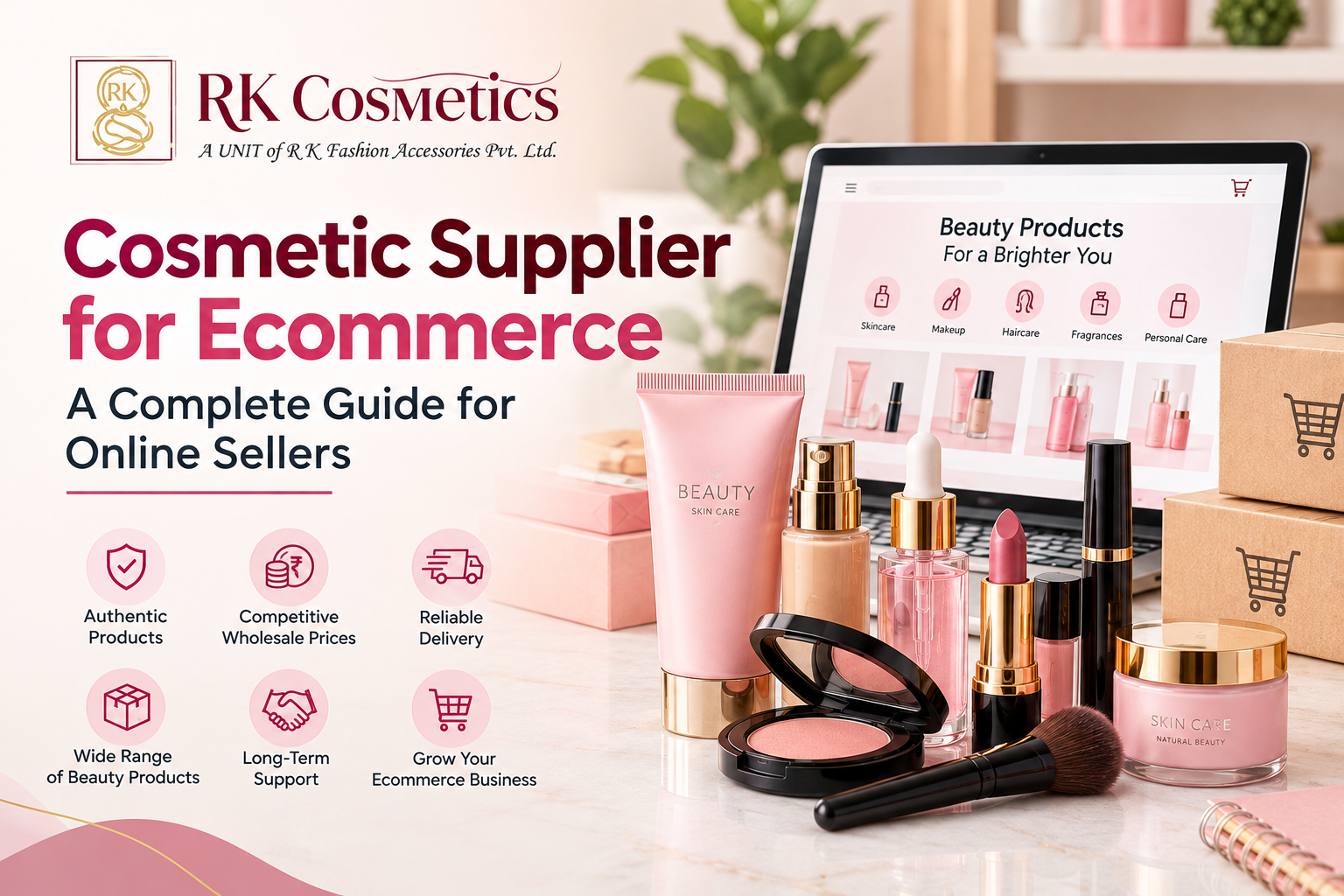
Choosing the right cosmetic supplier for ecommerce is one of the most important decisions for an online beauty business. Product quality, wholesale pricing, availability, packaging, shipping, and supplier reliability can directly influence customer satisfaction and profitability. Whether you operate your own ecommerce website, sell through marketplaces, or manage social-commerce channels, selecting a suitable supplier requires more than simply comparing product prices.
This guide explains what ecommerce sellers should evaluate before choosing a cosmetic supplier and how to build a reliable wholesale procurement process.
What Is a Cosmetic Supplier for Ecommerce?
A cosmetic supplier for ecommerce provides beauty and personal-care products to online retailers, resellers, marketplace sellers, and other businesses.
Depending on the supplier, the product portfolio may include:
- Skincare products
- Makeup and cosmetics
- Hair-care products
- Baby-care products
- Personal-care products
- Fragrances
- Beauty accessories
- Salon products
- Bath and body products
- Men’s grooming products
Some suppliers sell products in bulk, while others may offer different wholesale quantities depending on the retailer’s requirements.
Why Is Supplier Selection Important for Ecommerce Businesses?
Online customers cannot physically inspect a product before purchasing it. Therefore, product quality and accurate product information are particularly important.
A dependable supplier can help an ecommerce business with:
- Consistent product availability
- Competitive procurement costs
- Reliable order fulfillment
- Better inventory planning
- Authentic products
- Appropriate packaging
- Reduced stock shortages
- Faster replenishment
- More predictable business operations
On the other hand, an unreliable supplier can result in delayed deliveries, damaged products, inaccurate inventory, customer complaints, and financial losses.
What Should You Check Before Choosing a Cosmetic Supplier?
Before placing a wholesale order, ecommerce sellers should evaluate several factors rather than focusing exclusively on price.
Important supplier evaluation points include:
- Product authenticity
- Wholesale pricing
- Minimum order quantity (MOQ)
- Product variety
- Manufacturing and expiry information
- Packaging quality
- Shipping arrangements
- Order processing time
- Return and replacement policies
- Invoicing and documentation
- Customer support
- Stock availability
Businesses looking for a cosmetic supplier for ecommerce should ideally compare several suppliers before making a long-term purchasing decision.
How Can Ecommerce Sellers Compare Wholesale Prices?
Price comparison should be based on the total landed cost, not merely the supplier’s listed unit price.
A basic calculation is:
Total Landed Cost = Product Cost + Shipping + Taxes + Handling Costs + Other Applicable Charges
When comparing a cosmetic supplier for ecommerce, businesses should calculate the actual cost per sellable unit.
For example, two suppliers may offer the same product at different prices, but one may charge significantly higher shipping or impose a larger minimum order. Therefore, the apparently cheaper supplier may not always provide the better commercial deal.
What Product Categories Should Ecommerce Sellers Stock?
The ideal product mix depends on the target audience, selling platform, location, and available capital.
A beauty ecommerce store may consider stocking:
- Face cleansers
- Moisturizers
- Sunscreens
- Serums
- Makeup products
- Lip products
- Hair shampoos
- Conditioners
- Hair treatments
- Body lotions
- Bath products
- Baby-care products
- Grooming products
- Beauty tools and accessories
Instead of purchasing large quantities across every category, new sellers can begin with products that match their target customer’s purchasing behavior.
How Should Businesses Manage Minimum Order Quantities?
Minimum order quantity is an important consideration when purchasing wholesale inventory.
A high MOQ may provide a lower unit price but can also increase:
- Initial investment
- Storage requirements
- Inventory risk
- Cash-flow pressure
- Potential unsold stock
A cosmetic supplier for ecommerce should ideally offer purchasing options that are commercially practical for the retailer’s business size.
Small businesses may benefit from manageable quantities, while established ecommerce companies with strong sales volumes may prefer larger bulk orders.
How Important Are Product Expiry Dates?
Expiry management is particularly important for cosmetics, skincare, personal-care, and other products with limited shelf life.
Before buying inventory, retailers should check:
- Manufacturing date
- Expiry or best-before information
- Remaining shelf life
- Batch details
- Storage requirements
Businesses should avoid purchasing quantities that cannot reasonably be sold within the available shelf-life period.
A practical inventory strategy is FIFO—First In, First Out, where older inventory is prioritized for sale before newer stock.
What Should Ecommerce Sellers Know About Packaging?
Packaging plays two roles in ecommerce: product protection and customer experience.
Suppliers should be able to provide products with appropriate packaging for transportation.
Retailers should consider:
- Original product packaging
- Outer cartons
- Protection against leakage
- Protection against breakage
- Tamper-related concerns
- Shipping durability
- Product labeling
When working with a cosmetic supplier for ecommerce, sellers should also consider whether products require additional protective packaging before being shipped to customers.
How Can a Retailer Evaluate Supplier Reliability?
Supplier reliability can be evaluated through actual purchasing experience and systematic checks.
Businesses can monitor:
- Order accuracy
- Delivery consistency
- Product availability
- Response time
- Invoice accuracy
- Replacement handling
- Damaged-product resolution
- Communication quality
It can be useful to begin a relationship with a smaller order before committing substantial working capital to a new supplier.
Can RK Cosmetics Support Ecommerce Wholesale Buyers?
RK Cosmetics can be considered by ecommerce businesses looking for wholesale beauty and personal-care inventory. Retailers should evaluate available categories, current stock, pricing, order quantities, and delivery terms according to their individual requirements.
For an ecommerce business, the right cosmetic supplier for ecommerce should ultimately be one that combines suitable pricing with dependable supply, authentic products, practical ordering conditions, and consistent service.
What Questions Should You Ask a Cosmetic Supplier?
Before confirming an order, ecommerce sellers can ask:
- What is the minimum order quantity?
- Which products are currently in stock?
- What are the wholesale prices?
- Is a GST invoice available?
- What is the available shelf life?
- What are the shipping charges?
- How quickly are orders dispatched?
- What is the replacement policy?
- How are damaged products handled?
- Can repeat orders be supplied consistently?
Getting clear answers to these questions can reduce procurement problems later.
How Can Ecommerce Sellers Build a Long-Term Supplier Relationship?
A strong supplier relationship can improve purchasing efficiency as an online store grows.
Businesses can:
- Maintain regular communication
- Pay invoices on time
- Forecast upcoming inventory requirements
- Share expected order volumes
- Monitor fast-moving products
- Discuss bulk pricing when volumes increase
- Maintain proper purchase records
- Review supplier performance periodically
A long-term relationship with a reliable cosmetic supplier for ecommerce can make inventory planning easier and support business expansion.
Final Thoughts
Choosing a cosmetic supplier is a strategic decision for any online beauty retailer. The best supplier is not necessarily the one offering the lowest quoted price. Ecommerce businesses should evaluate authenticity, product range, pricing, MOQ, shelf life, packaging, logistics, documentation, and customer support together.
Before selecting a cosmetic supplier for ecommerce, businesses should compare suppliers, test smaller orders where appropriate, calculate total landed costs, and monitor inventory performance. A structured procurement strategy can help ecommerce sellers maintain product availability while controlling costs and minimizing inventory risks.
For businesses purchasing wholesale beauty and personal-care products through RK Cosmetics, careful product selection and demand-based inventory planning can provide a practical foundation for sustainable ecommerce operations.