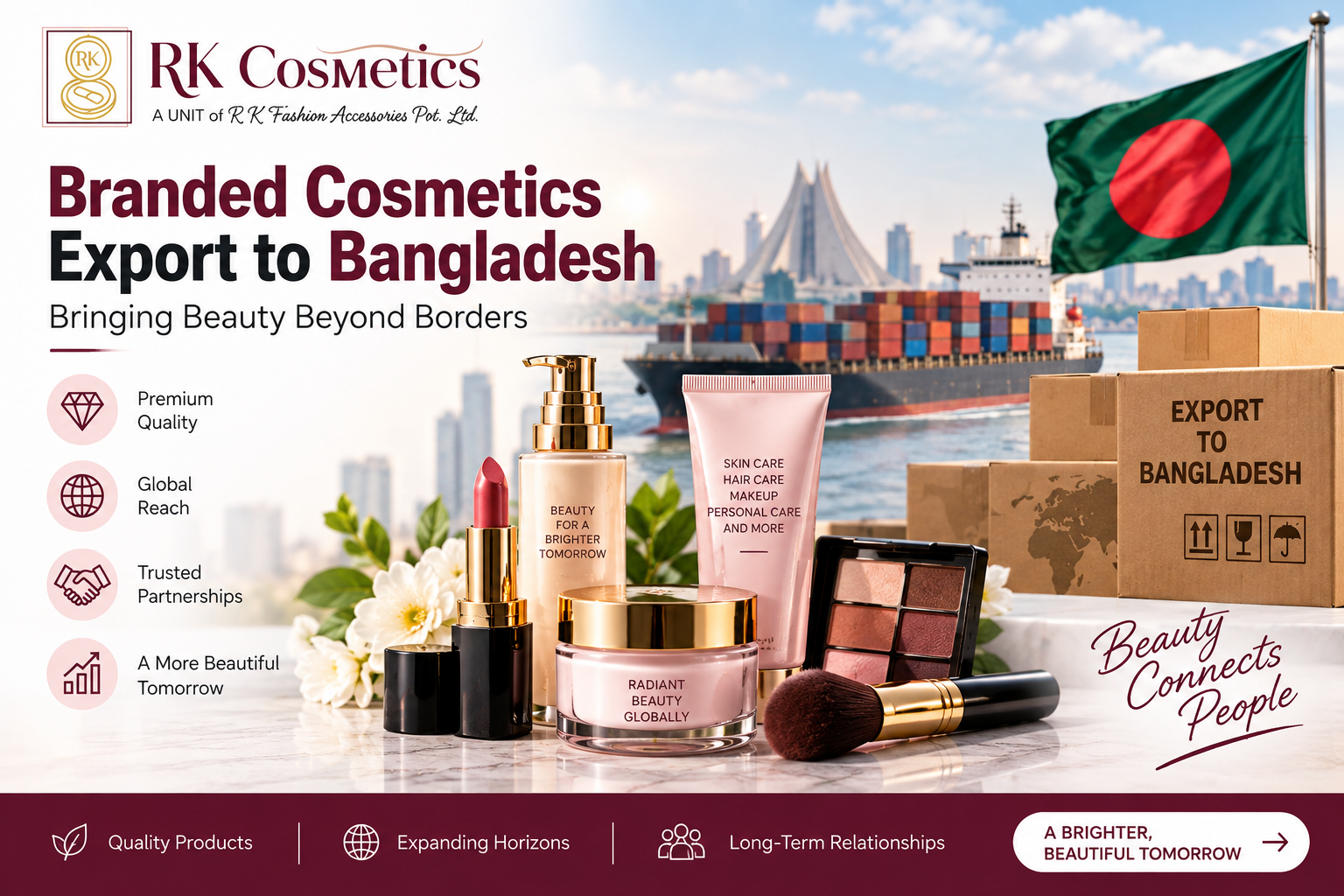
The beauty and personal-care industry has become increasingly international, creating opportunities for businesses that want to expand their product distribution across South Asian markets. Branded cosmetics export to Bangladesh can be an attractive business opportunity when exporters understand product classification, documentation, packaging, customs procedures, quality requirements, and market expectations. Bangladesh Customs classifies cosmetics, perfumes, skincare, makeup, and related preparations under Chapter 33 of its tariff structure.
For exporters and importers working with branded cosmetics export to Bangladesh, preparation is particularly important because requirements can vary according to the product and its HS code. Businesses such as RK Cosmetics can support buyers by focusing on authentic products, organized documentation, appropriate packaging, and dependable export processes.
Why Is Bangladesh an Interesting Market for Cosmetic Products?
Bangladesh has a substantial and developing beauty and personal-care market. Industry representatives reported in 2025 that the country’s cosmetics and skincare market exceeded Tk 24,000 crore annually, while also highlighting concerns surrounding counterfeit and smuggled products.
This creates opportunities for legitimate suppliers that can offer reliable and properly documented products.
Key factors supporting demand include:
- Growing interest in skincare and personal grooming
- Increasing availability of modern retail channels
- Demand for authentic international-quality products
- Expansion of online shopping
- Greater consumer awareness of ingredients and product quality
- Interest in makeup, skincare, haircare, fragrances, and personal-care products
For branded cosmetics export to Bangladesh, authenticity can therefore become an important competitive advantage.
What Types of Cosmetics Can Be Exported?
Cosmetic products cover a broad range of categories. Bangladesh’s customs tariff includes categories such as perfumes, beauty and makeup preparations, skincare products, hair preparations, oral-care products, deodorants, and other personal-care preparations.
Common export categories include:
- Face creams and moisturizers
- Serums and skincare preparations
- Cleansers and toners
- Makeup products
- Lip and eye makeup
- Face powders
- Shampoos and hair-care products
- Deodorants
- Perfumes and toilet waters
- Personal-care preparations
- Manicure and pedicure products
The correct HS classification should be established before shipping because documentation, duties, taxes, and product-specific requirements can depend on the classification.
What Documents Are Needed for Cosmetic Imports into Bangladesh?
Documentation is one of the most important aspects of branded cosmetics export to Bangladesh. Bangladesh Customs states that general import clearance documentation can include the letter of credit, commercial invoice, transport document, packing list, certificate of origin, insurance documents, and VAT/BIN-related documentation.
Depending on the shipment, businesses may need to prepare:
- Commercial invoice
- Packing list
- Certificate of origin
- Bill of lading or airway bill
- Insurance documentation
- Import-related banking documents
- VAT/BIN documentation
- Product-specific certificates or clearances
- Intellectual-property documentation where applicable
Importers should verify the latest requirements for each individual HS code rather than relying on a generic cosmetics checklist.
Are There Special Requirements for Cosmetic Products?
Yes. Requirements can differ according to the exact product classification.
For example, Bangladesh’s Import Export Hub lists a product-specific clearance certificate from the Bangladesh Standards and Testing Institution (BSTI) for certain face and skin cream classifications. The portal also notes that its product information should be checked against the applicable legislation because requirements can change and may not always be exhaustive.
Therefore, exporters involved in branded cosmetics export to Bangladesh should:
- Identify the correct HS code.
- Check the Bangladesh Customs Import Export Hub.
- Confirm applicable BSTI requirements.
- Verify current duty and tax rates.
- Review product-specific compliance requirements.
- Confirm documentation with the Bangladeshi importer or customs agent.
Why Is Product Authenticity Important?
Authenticity is particularly important in international cosmetics distribution. Counterfeit products can create safety, financial, legal, and reputational problems.
For legitimate branded cosmetics export to Bangladesh, exporters should maintain clear evidence of product origin and supply-chain authenticity.
Useful practices include:
- Purchasing products through legitimate supply channels
- Maintaining invoices and purchase records
- Providing accurate product descriptions
- Preserving batch and manufacturing information
- Using genuine packaging
- Avoiding unauthorized substitutions
- Maintaining appropriate documentation for branded products
Bangladesh Customs specifically identifies intellectual-property documentation among additional documents that may apply to imported branded goods registered under relevant IP laws.
How Should Cosmetics Be Packaged for Export?
Cosmetic packaging needs to protect products throughout transportation while also presenting accurate product information.
Before dispatch, exporters should check:
- Product name
- Manufacturer information
- Ingredients where applicable
- Batch or lot information
- Net quantity
- Country of origin
- Expiry or relevant date information
- Storage instructions where applicable
- Safety information
- Outer-carton markings
Bangladesh’s labeling guidance states that imported goods should display the country of origin in large, indelible lettering, preferably in English.
Good packaging also reduces the possibility of leakage, breakage, contamination, or deterioration during transportation.
How Can Exporters Reduce Customs Delays?
Efficient branded cosmetics export to Bangladesh requires coordination between the exporter, importer, freight provider, customs agent, and other relevant parties.
A practical preparation checklist includes:
- Confirm the HS code before shipping.
- Verify product-specific import requirements.
- Prepare commercial documents accurately.
- Ensure invoice and packing-list quantities match.
- Confirm country-of-origin documentation.
- Check packaging and labeling.
- Review applicable duties and taxes.
- Share documents with the importer before dispatch.
- Use a qualified customs or C&F agent when appropriate.
- Keep copies of all shipment records.
Bangladesh Customs provides an Import Export Hub where users can search by HS code or product description and review requirements, tariffs, duties, taxes, and related compliance information.
What Should Importers Look for in an Export Partner?
Choosing an appropriate supplier is an important part of branded cosmetics export to Bangladesh. Price should not be the only consideration because poor documentation, questionable authenticity, or inadequate packaging can create much larger costs later.
Importers should evaluate:
- Product authenticity
- Product range
- Documentation practices
- Packaging standards
- Order quantities
- Lead times
- Export experience
- Communication
- Shipment coordination
- After-sales support
RK Cosmetics can be considered by buyers looking for a supplier focused on organized cosmetic sourcing and export support. A professional supplier should be able to communicate clearly about product availability, documentation, packaging, quantities, and shipment arrangements.
Final Thoughts
The opportunity for branded cosmetics export to Bangladesh can be significant for suppliers that combine authentic products with proper documentation, compliant packaging, competitive pricing, and reliable logistics. Bangladesh Customs provides an HS-code-based Import Export Hub to help traders identify applicable requirements, making regulatory research an essential part of the export process.
For businesses planning long-term distribution, success depends on more than simply sending cosmetic products across the border. Careful product classification, authenticity verification, documentation, labeling, customs coordination, and communication with the local importer can help create a smoother trading process. Working with an experienced supplier such as RK Cosmetics can further help buyers organize their sourcing and export requirements according to their business needs.